

Long Run Fueling: Train Your Stomach Like You Train Your Legs
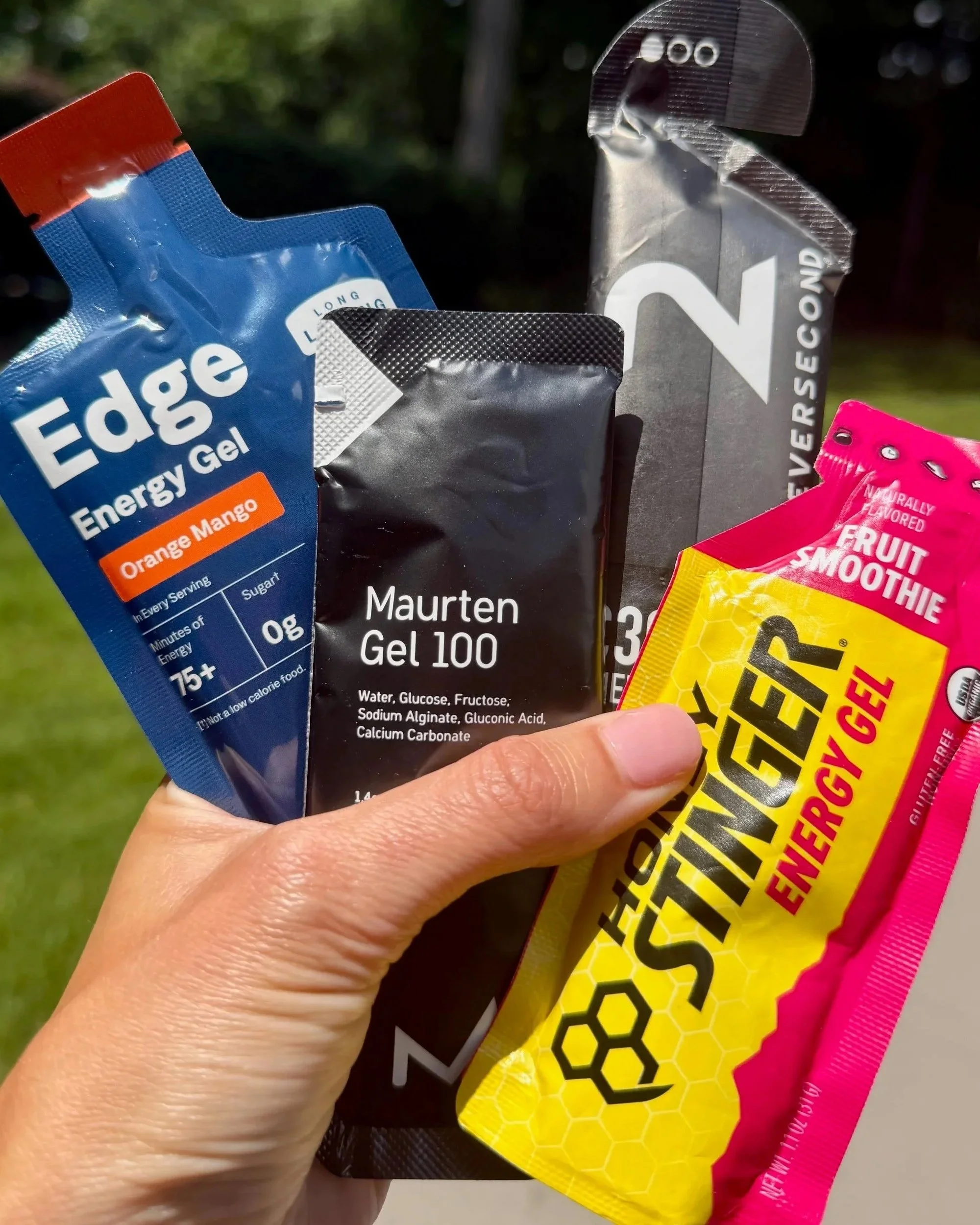
A topic that has come up a lot recently is fueling during runs. Just because we can run 12 miles without fuel doesn't mean we should. As runners, we spend so much time focusing on paces, workouts, mileage, shoes, and training plans. But for some reason, fueling often gets pushed to the bottom of the priority list. The reality is, fueling is a skill just like pacing. We need to train what to fuel with, when to fuel, and even teach our gut how to tolerate carbohydrates while we're running. We can't expect to successfully take a gel every 30 minutes during a marathon if we've never practiced doing it in training.
The goal of your long run isn't just to finish the miles. It's to finish feeling as strong as possible while teaching your body how to fuel efficiently for race day.
Why Is Fueling So Important?
Your body stores carbohydrates as glycogen in your muscles and liver. Those glycogen stores are your body's preferred fuel source during running—but they're limited. Depending on your pace, effort, and how well you fueled beforehand, most runners have enough stored glycogen to last roughly 60-90 minutes. Once those stores start running low, you'll notice it. Your pace slows, running suddenly feels much harder., your legs become heavy, your perceived effort climbs–and if you've become really depleted, you may experience the dreaded "wall."
Fueling during your run helps preserve those glycogen stores, maintain steady energy, and allows you to complete the workout the way it was intended. Think about it—why wouldn't you want every workout to be as successful as possible?
Sometimes that extra gel is the difference between confidently hitting your marathon pace and finishing the run thinking, "I could absolutely race at that pace," versus barely hanging on for the last few miles and questioning whether your goal is realistic.
Don’t skip the pre-run fuel.
Before we dive into when to fuel during your run, we should first talk about pre-run fueling.
Especially during these hot summer months, many of us like to roll out of bed and get our run in before the heat of the day really sets in. That's a great strategy—but there's no reason to do it on an empty stomach. Heading out under-fueled means you're starting your run with a partially depleted tank. Eating carbohydrates before your run helps top off your glycogen stores so your muscles have readily available fuel from the very first mile. That means better energy, higher-quality workouts, and a better chance of actually training at the intensity your plan calls for.
Running fasted makes it more difficult to maintain your target pace, increase your perceived effort, and leave you feeling more fatigued afterward. Over time, consistently under-fueling your training can slow recovery, reduce workout quality, increase your risk of illness and injury.
You don't need a huge breakfast before every run. For many runners, a banana, a piece of toast with honey, or even a Pop-Tart 30-60 minutes before heading out is enough to provide the quick energy your body needs to perform well. If you really struggle to eat before an early morning run, try drinking your carbohydrates instead. A bottle of Maurten Drink Mix 160 or Skratch can be an easy way to get some fuel in before you head out. As an added bonus, you're also getting a head start on your hydration—but don't worry, we'll dive deeper into hydration in another article!
So...When Should You Fuel?
I'll admit it—I used to only carry gels if I was running more than 10 miles. Why? Honestly...I have no idea, and I know I'm not the only one who's been guilty of thinking, "It's just an easy run. I don't need fuel."
The truth is, you should probably have a gel with you on just about every run. Maybe you headed out for a six-mile easy run without eating breakfast. By mile two you're dragging, your legs feel flat, and you're wondering why today's run feels so much harder than it should. Take the gel. There's no prize for running yourself deeper into an energy deficit. For runs lasting longer than about 90 minutes, carrying fuel isn't optional—it's part of the workout.
A good target is about 60 grams of carbohydrates per hour. Most gels contain somewhere between 20-30 grams of carbohydrates, so taking one about every 30 minutes gets you pretty close to that goal. If you're drinking a carbohydrate-containing sports drink during your run, those carbohydrates count toward your total as well. Remember, fueling isn't something you do because you're struggling. It's something you do so you don't struggle.
Don't Wait Until You Feel Hungry.
One of the biggest fueling mistakes runners make is waiting until they feel hungry or their energy crashes. By that point, you're already playing catch-up. Instead, begin fueling early—usually around the 30-45 minute mark—and continue taking in carbohydrates consistently throughout the run.
One of my favorite analogies compares glycogen stores to your phone battery. Most runners think of fueling like filling up a gas tank. You use the gas, the tank empties, then you refill it and you're ready to go again. Our bodies don't work quite that way. Think about your phone instead. When your battery dies, plugging it in doesn't instantly bring it back to 100%. It takes time to recharge.
Your glycogen stores work the same way. Once you've completely emptied them, your body can't immediately replace them. After exercise, your muscles absorb carbohydrates and gradually rebuild glycogen over several hours—and full restoration can take 24 hours or more after a long or particularly hard run, especially if you don't eat enough carbohydrates afterward. That's why we don't want to let the battery reach 0%. By consistently "topping off" your glycogen stores throughout your run, you're giving your body a steady supply of fuel so it can keep performing instead of digging itself into a hole that's difficult to climb out of.
Fueling Helps Recovery, Too.
Fueling during your long run isn't just about today's workout—it's about tomorrow's as well.
By preserving some of your glycogen stores during the run, your body doesn't have to spend as much time recovering afterward. You'll replenish your energy stores more quickly, your muscles can begin repairing themselves sooner, and you'll often feel fresher heading into your next workout. Good fueling doesn't just help you finish today's run stronger—it helps you show up ready to train again tomorrow.
Long Runs Are Practice for Race Day.
We've all heard it before: race day should never be the first time you try something new.
Every long run is an opportunity to practice your fueling strategy.
Which fuel sits best in your stomach?
How often should you eat?
Can you comfortably take in 60 grams of carbohydrates per hour?
How will you carry your fuel?
How will you remember to take it?
Every long run gives you another chance to answer those questions. Some runs will go perfectly, others will teach you that a certain gel doesn't agree with you, or that you need to fuel a little earlier. Both are valuable.
By the time race morning arrives, your fueling plan should feel just as automatic as your pacing plan. The less you have to think about it on race day, the more you can focus on doing what you've trained for.
Fueling is part of training—not an afterthought. Train your stomach the same way you train your legs, and you'll give yourself the best chance to feel strong from the first mile all the way to the finish line.